
Epigraph:
“It was only as a mercy that We sent you [Prophet] to all people.” (Al Quran 21:107)
“The believers in their mutual kindness, compassion, and sympathy are just like one body.” The Prophet Muhammad
“None of you truly believes until he loves for his brother what he loves for himself.” The Prophet Muhammad
Written and collected by Zia H Shah MD, Chief Editor of the Muslim Times
According to the Pew Research Center’s 2009 report, “Mapping the Global Muslim Population,” Shia Muslims constitute approximately 10-13% of the global Muslim population, with the majority residing in four countries: Iran, Pakistan, India, and Iraq.
In Iran, Shia Muslims make up 90-95% of the Muslim population, totaling between 66 and 70 million individuals, which accounts for 37-40% of the world’s Shia population. In Iraq, Shia Muslims constitute 65-70% of the Muslim population, totaling 19-22 million individuals, which is 11-12% of the global Shia population. In Iraq, Shia Muslims constitute 65-70% of the Muslim population, totaling 19-22 million individuals, which is 11-12% of the global Shia population.
Pakistan hosts an estimated 17-26 million Shia Muslims, comprising 10-15% of its Muslim population and representing 10-15% of the global Shia population. India’s Shia community numbers between 16 and 24 million, making up 10-15% of its Muslim population and 9-14% of Shias worldwide.
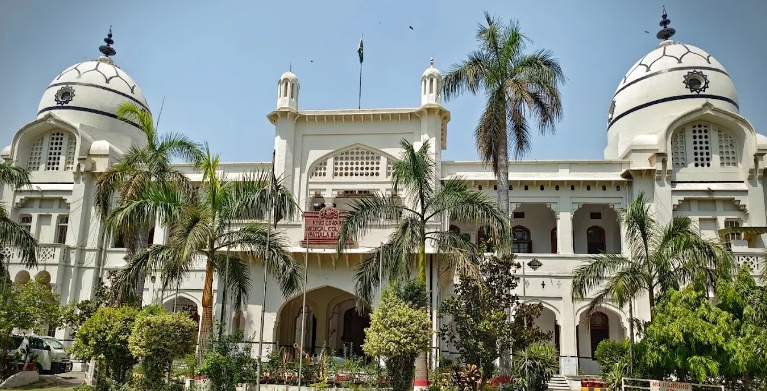
Professor Syed Zafar Haider (1927 – 2017) was a distinguished Pakistani surgeon renowned for his pioneering contributions to endocrine and thyroid surgery in the country. Born in Pakpattan, Pakistan, in 1927, he pursued his early education locally before attending Forman Christian College in Lahore for his F.Sc. He graduated from King Edward Medical College (KEMC), Lahore, in 1950.
His son, Dr. Ali Haider, and grandson, Murtaza Haider, were gunned down by some militant Sunni group in Pakistan close to their home as Ali Haider was driving Murtaza Haider to Aitchison College on February 18, 2013.
In 1952, Prof. Haider moved to the United Kingdom for postgraduate training, where he had the opportunity to work alongside esteemed surgeons such as Henry Hamilton Stewart, a pioneer of partial nephrectomy, and Sir Thomas Holmes Sellors, a former President of the Royal College of Surgeons of England known for his work in pulmonary valvulotomy.
Upon returning to Pakistan in 1957, Prof. Haider was appointed Assistant Professor at Nishtar Medical College in Multan. There, he established and advanced head and neck as well as esophageal surgery, performing the first partial nephrectomy at the institution. In 1980, he transferred to King Edward Medical College, where he performed Punjab’s first parathyroidectomy and transformed the East Surgical Ward of Mayo Hospital into a leading center for thyroid surgeries, completing over two thousand thyroidectomies.
I had the honor to learn the theory of surgery from him in King Edward Medical College during my years there 1979-1985.
After retiring in 1988 as Professor of Surgery at KEMC, Prof. Haider continued his surgical practice at Shalamar Hospital in Lahore until 2001. His dedication to surgery and education left an indelible mark on Pakistan’s medical community, mentoring numerous surgeons who have since held prominent positions both nationally and internationally.
Prof. Haider’s legacy is honored by the Pakistan Endocrine & Thyroid Surgeons Association (PETSA), reflecting his lasting impact on the field. He passed away on August 3, 2017, after a prolonged battle with prostate cancer, marking the end of a remarkable era in Pakistani surgery.
Sunni-Shia violence in Pakistan has been a persistent challenge, deeply rooted in history, sectarian divisions, and geopolitical influences. While Pakistan was founded as a Muslim-majority country that sought to accommodate all sects, sectarianism has gradually escalated, leading to violent conflicts, political instability, and loss of thousands of lives.
The sectarian divide between Sunnis and Shias dates back to the early years of Islam, but in Pakistan, its violent manifestations became more pronounced during the late 20th century. The Soviet-Afghan War (1979-1989) played a significant role in exacerbating sectarian tensions, as Pakistan became a hub for jihadist groups, some of which adopted an anti-Shia stance. Additionally, the Iranian Revolution of 1979 and Saudi-Iranian rivalry intensified sectarian proxy conflicts in the region, with both countries supporting sectarian groups in Pakistan.
The root cause of this violence deep down is bad theology that focuses on the differences rather than commonalities in understanding what is Islam and who is a Muslim.
According to the PEW Research Center in 13 of the 23 countries where the question was asked, at least half of respondents say that Shias are members of the Islamic faith. However, opinion on this matter is far from universal, and in at least two countries – Egypt and Morocco – the dominant view is that Shias are not Muslims.

Overall, Muslims in South Asia most consistently agree that Shias share their religion. At least three-quarters express this view in Afghanistan (84%) and Bangladesh (77%), while about half (53%) agree in Pakistan.
Acceptance of Shias as fellow Muslims also is widespread in Southern and Eastern Europe. The one exception is Kosovo, where 36% of Muslims consider Shias as belonging to the Islamic faith. However, a substantial percentage of Kosovar Muslims (43%) either have not heard of Shias or are not sure whether Shias are Muslims. Only about one-in-five (21%) actually reject the notion that Shias are Muslims.
In the Middle East and North Africa, distinctions between Sunnis and Shias appear to be better known: in no country in the region do more than a quarter (23%) of respondents say they are either unfamiliar with the term “Shia” or unsure whether Shias are Muslims.
In three of the countries surveyed in the region – Tunisia, Jordan and the Palestinian territories – opinion is closely divided on whether Shias are Muslims. In Egypt and Morocco, the prevailing view (52% and 51%, respectively) is that Shias are not Muslims. Only in Iraq and Lebanon do overwhelming majorities (92% and 88%, respectively) acknowledge Shias as Muslims.

In part, these findings reflect the fact that in both countries Shias make up a substantial portion of the population (51% of Iraqi Muslims surveyed self-identify as Shia; 48% of Lebanese Muslims self-identify as Shia), and Shia views are incorporated into these overall numbers.26
But when the attitudes of Sunnis in these countries are examined separately, it becomes clear that the Sunni communities in Iraq and Lebanon are much more welcoming of Shias than Sunnis in other parts of the Middle East and North Africa. Indeed, Sunnis in these two countries are at least 23 to 28 percentage points more likely than Sunnis elsewhere in the region to recognize Shias as Muslims.
The cases of Iraq and Lebanon suggest that the experience of living side-by-side may increase, rather than decrease, mutual recognition between Sunnis and Shias. And the survey findings indicate that these may not be the only instances where this is true.
Sunnis are also more likely to embrace Shias as fellow Muslims in Azerbaijan, Russia and Afghanistan – countries where 6% or more of Muslims self-identify as Shia. Rates of acceptance range from 90% in Azerbaijan, to 85% in Russia, to 83% in Afghanistan. Overall, these three countries – along with Iraq and Lebanon – represent five of the six countries where Sunnis are most accepting of Shias. (The sixth is Bangladesh, at 77%.)
Pakistan, where 6% of Muslims surveyed self-identify as Shias, is the one exception to this rule. Pakistan’s Sunnis are more mixed in their attitudes toward Shias: half say they are Muslims, while 41% disagree.
This theological sectarianism then grows and leads to violence.
Causes of Sunni-Shia Violence in Pakistan
Radical religious organizations and militant groups such as Sipah-e-Sahaba Pakistan (SSP) and Lashkar-e-Jhangvi (LeJ) have historically targeted Shia Muslims, considering them heretics. On the other hand, Shia militant groups like Sipah-e-Muhammad Pakistan (SMP) have also engaged in retaliatory violence.
Pakistan has often been caught in the crossfire of the broader Saudi-Iranian rivalry. Saudi Arabia has historically supported hardline Sunni groups, while Iran has backed Shia organizations, fueling sectarian violence.
Despite numerous attacks, perpetrators of sectarian violence often go unpunished due to weak law enforcement, political patronage of extremist groups, and an inefficient judicial system.
Unregulated religious seminaries (madrassas) have been breeding grounds for sectarian hatred, where radical clerics propagate anti-Shia or anti-Sunni narratives. This has played a significant role in radicalizing the youth.
Political parties and groups have used sectarian identities for their own gains, further deepening divisions within society. This has led to political patronage of sectarian organizations, making it difficult to dismantle them.
Shia processions, imambargahs (Shia places of worship), and scholars have frequently been targeted by Sunni extremist groups. Similarly, Sunni clerics have also been assassinated, leading to cycles of retaliatory violence.
Conclusion
Sunni-Shia violence in Pakistan remains a major challenge that threatens national security, social cohesion, and economic stability. While government initiatives have had some success in curbing sectarian violence, a more comprehensive and long-term strategy is needed. By addressing the root causes of sectarianism, regulating religious institutions, and promoting tolerance, Pakistan can move towards a more peaceful and united future.
The theological basis for declaring each other non-Muslims are frivolous and narrow-minded. Against the very essence of Islam, which means peace, and at its heart, it promotes compassion and kindness.

 The Glorious Quran and Science
Leave a comment