

Epigraph:
سَنُرِيهِمْ آيَاتِنَا فِي الْآفَاقِ وَفِي أَنفُسِهِمْ حَتَّىٰ يَتَبَيَّنَ لَهُمْ أَنَّهُ الْحَقُّ ۗ أَوَلَمْ يَكْفِ بِرَبِّكَ أَنَّهُ عَلَىٰ كُلِّ شَيْءٍ شَهِيدٌ
We shall show them Our signs upon the horizons and within themselves till it becomes clear to them that it is the truth. Does it not suffice that your Lord is Witness over all things? (Al Quran 41:53)
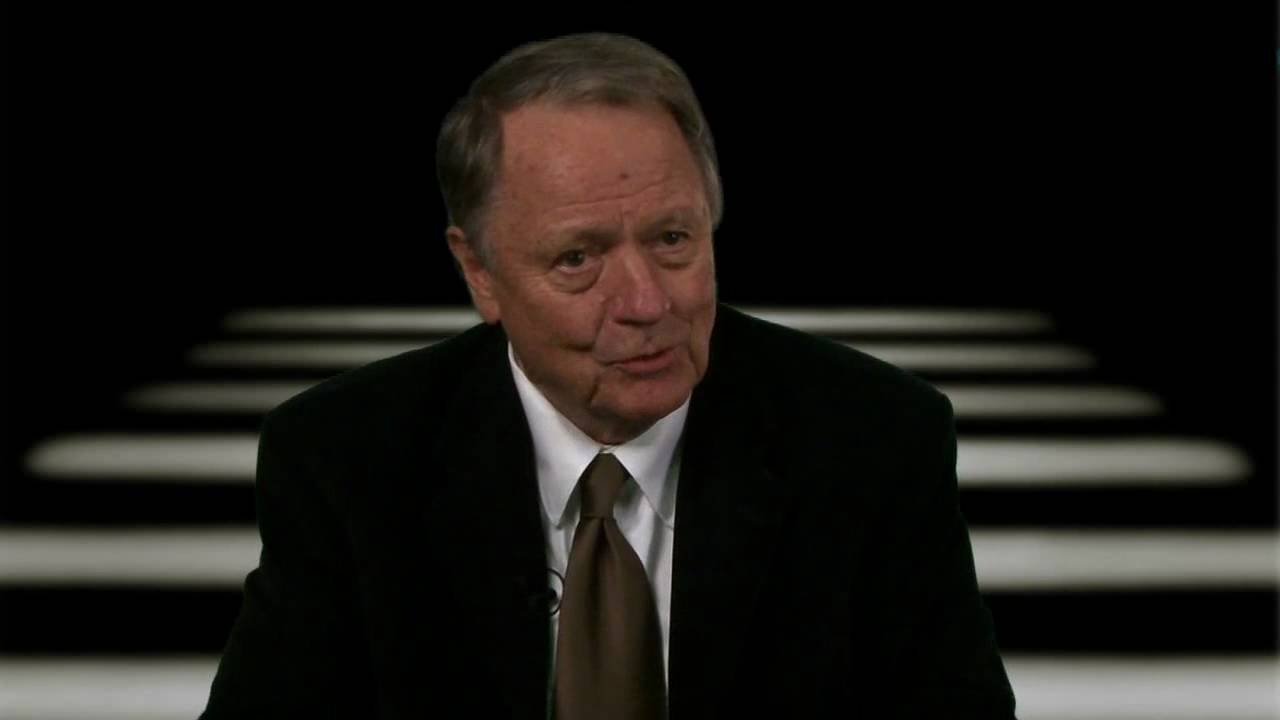
Written and collected by Zia H Shah MD, Chief Editor of the Muslim Times
Understanding consciousness within the framework of classical physics presents significant challenges. Classical physics, rooted in deterministic principles and the concept of a mechanistic universe, struggles to account for the subjective and qualitative aspects of conscious experience.
Classical mechanics operates on the premise that physical systems follow deterministic laws, where initial conditions entirely determine future states. This framework does not readily accommodate the subjective nature of consciousness, which encompasses personal experiences, intentionality, and qualia—the qualitative aspects of sensations and perceptions. As noted in a study on consciousness in classical physics, applying classical information theorems to the study of consciousness reveals inherent difficulties, suggesting that classical physics may not be equipped to fully explain conscious phenomena. researchgate.net
In contrast, some researchers propose that quantum mechanics, with its inherent indeterminism and non-locality, might offer a more suitable framework for understanding consciousness. The quantum mind hypothesis suggests that quantum phenomena could play a crucial role in cognitive functions, potentially bridging the explanatory gap left by classical physics. en.wikipedia.org
Philosophers such as Roger Penrose have argued that known laws of physics are inadequate to explain the phenomenon of consciousness. In his book The Emperor’s New Mind, Penrose suggests that new physics may be required to understand the connection between fundamental physics and human consciousness.
Henry P. Stapp, an American physicist, has made significant contributions to the interpretation of quantum mechanics, particularly concerning its implications for consciousness and the mind-matter relationship. Collaborating with notable physicists such as Wolfgang Pauli and Werner Heisenberg, Stapp has developed perspectives that integrate quantum theory with the philosophy of mind. informationphilosopher.com
He clearly acknowledges that classical physics cannot explain consciousness because, in a billiard ball, mechanistic world, the only way to explain consciousness is to consider it an epiphenomenon or an emergent property, which is another way of saying that it is a kind of magic and is not a real explanation. Additionally, in a Newtonian deterministic world, consciousness may exist, but according to Stapp, it will have no causal power. In other words Stapp’s views are consistent with the participatory role of consciousness in the physical world. He clearly asserts that consciousness and the human brain operate in a quantum world.
So, let us understand his explanation.
Stapp advocates for the idea that consciousness plays a fundamental role in the collapse of the quantum wave function. He posits that quantum wave functions collapse when conscious minds select one among the alternative quantum possibilities. This perspective aligns with the von Neumann–Wigner interpretation, which suggests that the observer’s mind is integral to the measurement process in quantum mechanics. en.wikipedia.org
In his book “Mindful Universe: Quantum Mechanics and the Participating Observer” (2007), Stapp explores how mind may interact with matter via quantum processes in the brain. He proposes a model that exploits certain aspects of the quantum Zeno effect within synapses, suggesting that mental effort can influence neural processes. This hypothesis differs from other models, such as those proposed by Roger Penrose and Stuart Hameroff, who focus on quantum computing within microtubules in neurons. en.wikipedia.org
Stapp draws upon John von Neumann’s “Mathematical Foundations of Quantum Mechanics” to support his views. He credits von Neumann with providing an “orthodox” quantum mechanics framework that mathematically demonstrates the essential role of quantum physics in the mind.
So, let us take a detour into Neumann’s work. In his seminal 1932 work, Mathematical Foundations of Quantum Mechanics, John von Neumann delineated two distinct types of evolution for a quantum system, addressing the dual nature of quantum state changes. These are commonly referred to as Process 1 and Process 2.
Process 1: Measurement (State Reduction or Collapse)
This process describes the discontinuous and probabilistic change that occurs when a quantum system is measured. Upon observation, the system’s wave function collapses from a superposition of possible states to a definite state corresponding to the measurement outcome. This collapse is inherently non-deterministic and introduces an element of randomness into the system’s evolution. Von Neumann formalized this concept through the projection postulate, which mathematically describes how a quantum state reduces to an eigenstate of the observable being measured. en.wikipedia.org
Process 2: Unitary Evolution
In the absence of measurement, a quantum system undergoes deterministic and continuous evolution governed by the Schrödinger equation. This in a way is analogous to classical physics. This unitary evolution preserves the probabilities of the system’s possible states and is reversible. It describes how the quantum state evolves smoothly over time without external observation or interaction. en.wikipedia.org
Von Neumann’s distinction between these two processes has been foundational in discussions about the measurement problem in quantum mechanics, influencing various interpretations and ongoing debates in the field.
According to Stapp, in classical physics, the principle of causal closure asserts that every physical event is fully determined by preceding physical events, leaving little room for non-physical influences. Quantum mechanics, however, introduces probabilistic elements, particularly during the collapse of the wave function—a process traditionally viewed as random. Stapp proposes that conscious intention can influence this collapse, effectively allowing the mind to play a causal role in determining physical outcomes.
The Copenhagen interpretation of quantum mechanics, formulated in the 1920s by physicists such as Niels Bohr and Werner Heisenberg, is one of the earliest and most widely taught interpretations of quantum mechanics. A central feature of this interpretation is the role of the observer in the measurement process.
In the Copenhagen interpretation, the wave function represents a system’s state and encapsulates all possible outcomes of a measurement. However, it does not describe the system’s properties prior to measurement. Instead, the wave function provides probabilities for various outcomes, and only upon measurement does the system ‘choose’ a definite state. This act of measurement, often associated with an observer, is crucial in determining the system’s properties.
The term “observer” in this context refers to any interaction that causes the wave function to collapse into a definite state, not necessarily a conscious being. As Werner Heisenberg noted, the observer’s role is to register decisions or processes in space and time, and it does not matter whether the observer is an apparatus or a human being. However, the registration, i.e., the transition from the “possible” to the “actual,” is absolutely necessary and cannot be omitted from the interpretation of quantum theory. en.wikipedia.org
According to the Copenhagen interpretation, prior to measurement, a quantum system exists in a superposition of possible states. The act of measurement causes the wave function to collapse into one of these possible states, resulting in a definite outcome. This collapse is inherently probabilistic, and the specific outcome cannot be predicted with certainty, only the probabilities of various outcomes.
While the Copenhagen interpretation emphasizes the role of the observer in the measurement process, it does not necessarily imply that consciousness is required for wave function collapse. The observer can be any physical system that interacts with the quantum system in a way that leads to a definite outcome. This perspective maintains the objectivity of quantum mechanics, as the results of measurements are independent of the individual observer.
Stapp favors the idea that quantum wave functions collapse only when they interact with consciousness as a consequence of “orthodox” quantum mechanics. He argues that quantum wave functions collapse when conscious minds select one among the alternative quantum possibilities. His hypothesis of how mind may interact with matter via quantum processes in the brain differs from that of Penrose and Hameroff. While they postulate quantum computing in the microtubules in brain neurons, Stapp postulates a more global collapse, a ‘mind like’ wave-function collapse that exploits certain aspects of the quantum Zeno effect within the synapses.
In summary, the Copenhagen interpretation assigns a pivotal role to the observer in the measurement process, as the act of observation leads to the collapse of the wave function and the realization of a definite outcome. This framework underscores the interplay between measurement and the probabilistic nature of quantum systems, highlighting the fundamental role of the observer in shaping the behavior of quantum phenomena.
So, Stapp’s work bridges the gap between quantum mechanics and consciousness studies. By proposing that conscious minds play a crucial role in the collapse of the quantum wave function, he offers a perspective that integrates physical theory with the philosophy of mind, contributing to ongoing discussions about the nature of reality and the role of consciousness within it.




 The Glorious Quran and Science
Leave a comment