
Epigraph:
الَّذِي خَلَقَ سَبْعَ سَمَاوَاتٍ طِبَاقًا ۖ مَّا تَرَىٰ فِي خَلْقِ الرَّحْمَٰنِ مِن تَفَاوُتٍ ۖ فَارْجِعِ الْبَصَرَ هَلْ تَرَىٰ مِن فُطُورٍ
ثُمَّ ارْجِعِ الْبَصَرَ كَرَّتَيْنِ يَنقَلِبْ إِلَيْكَ الْبَصَرُ خَاسِئًا وَهُوَ حَسِيرٌ
He is the Mighty, the Forgiving; Who created the seven heavens, one above the other. You will not see any flaw in what the Lord of Mercy creates. Look again! Can you see any flaws? Look again! And again! Your sight will turn back to you, weak and defeated. (Al Quran 67:3-4)
Written and collected by Zia H Shah MD, Chief Editor of the Muslim Times
Dr. Abdus Salam, along with Steven Weingberg and Sheldon Glashow, received the 1979 Nobel Prize in physics for his contributions to the Standard Model of particle physics. He marveled at what he and others had learned until then, quoted the above two verses of the Quran, and then added: “This, in effect, is the faith of all physicists; the deeper we seek, the more is our wonder excited, the more is the dazzlement for our gaze.”
He and his colleagues knew only part of the mystery of particle physics, which describes only three of the four basic forces in nature, with the exclusion of gravity. The mystery and plot has only thickened since then as several other Nobel prizes have been given out in physics for contributions to the Standard Model. The above video gives a glimpse of stranger than science fiction reality that we have been taking for granted.
Let me now give a brief summary in a reader-friendly fashion.
The Standard Model of particle physics
The Standard Model of particle physics is a comprehensive framework that describes the fundamental particles constituting matter and the forces through which they interact, excluding gravity. It categorizes elementary particles into fermions and bosons, each with corresponding antiparticles.
The Standard Model comprises 12 fundamental fermions and 12 corresponding antifermions, totaling 24 particles. Additionally, it includes 12 gauge bosons (8 gluons, W⁺, W⁻, Z⁰, and photon) and the Higgs boson, bringing the total to 37 distinct particles. Each particle’s properties and interactions are precisely defined, providing a robust framework for understanding the subatomic world.
Several Nobels have been given out for contributions to the Standard Model and below is a brief summary:
1979 Nobel Prize in Physics
Awarded jointly to Sheldon Glashow, Abdus Salam, and Steven Weinberg for their contributions to the theory of the unified weak and electromagnetic interaction between elementary particles, including, inter alia, the prediction of the weak neutral current. Their work led to the formulation of the electroweak theory, a cornerstone of the Standard Model. Wikipedia
1984 Nobel Prize in Physics
Carlo Rubbia and Simon van der Meer received the prize for their decisive contributions to the large project, which led to the discovery of the field particles W and Z, communicators of weak interaction. Their experimental work at CERN confirmed the existence of these particles, providing crucial validation for the electroweak theory. CNRS News
1995 Nobel Prize in Physics
Martin L. Perl was awarded half of the prize for the discovery of the tau lepton, a third-generation charged lepton, which expanded the understanding of the lepton family within the Standard Model. The other half was awarded jointly to Frederick Reines and Clyde L. Cowan Jr. for the detection of the neutrino, a fundamental neutral particle predicted by the Standard Model. Wikipedia
2004 Nobel Prize in Physics
David J. Gross, H. David Politzer, and Frank Wilczek were honored for the discovery of asymptotic freedom in the theory of the strong interaction. Their work on quantum chromodynamics (QCD) explained how quarks interact via the strong force, a fundamental aspect of the Standard Model. PBS
2008 Nobel Prize in Physics
Half of the prize was awarded to Yoichiro Nambu for the discovery of the mechanism of spontaneous broken symmetry in subatomic physics, which has significantly contributed to the Standard Model. The other half was shared by Makoto Kobayashi and Toshihide Maskawa for the discovery of the origin of the broken symmetry, which predicts the existence of at least three families of quarks in nature. Nobel Prize
2013 Nobel Prize in Physics
François Englert and Peter W. Higgs received the prize for the theoretical discovery of a mechanism that contributes to our understanding of the origin of mass of subatomic particles, and which recently was confirmed through the discovery of the predicted fundamental particle, by the ATLAS and CMS experiments at CERN’s Large Hadron Collider. This mechanism, known as the Higgs mechanism, and the associated Higgs boson are integral components of the Standard Model. Nobel Prize
These Nobel Prizes highlight the collaborative and cumulative efforts of the scientific community in developing and validating the Standard Model, which remains a fundamental framework for understanding the subatomic world.
The Schwinger effect
The Schwinger effect, named after physicist Julian Schwinger, is a phenomenon in quantum electrodynamics (QED) where a strong electric field can spontaneously produce electron-positron pairs from the vacuum.
This is included in this article to disarm those atheist physicists, who claim that our universe came from nothing and does not require a Creator. The Schwinger effect is described under this heading and conclusions will be drawn in the last section labelled as epilogue.
This process exemplifies the non-perturbative nature of quantum field theory, highlighting how intense electromagnetic fields can induce observable consequences from the vacuum state.
Theoretical Foundation
In classical physics, the vacuum is considered an empty void. However, quantum mechanics reveals that the vacuum is a seething landscape of virtual particles and antiparticles fleetingly appearing and annihilating. Under an extremely strong electric field, these virtual pairs can gain sufficient energy to become real, observable particles—a process known as vacuum decay. Schwinger provided a quantitative description of this effect in 1951, calculating the rate at which electron-positron pairs are produced in a constant electric field. The critical field strength, known as the Schwinger limit, is approximately 10¹⁸ V/m. Below this threshold, pair production occurs exponentially slowly, making the effect challenging to observe experimentally. Wikipedia
Experimental Challenges
Observing the Schwinger effect directly has been elusive due to the immense electric field strengths required. Current and planned laser facilities are approaching the necessary intensities, prompting renewed interest in experimental verification. Facilities such as the Extreme Light Infrastructure (ELI) and the European X-ray Free Electron Laser (XFEL) are developing capabilities that may bring the observation of the Schwinger effect within reach. Dunne Physics
Implications and Applications
The Schwinger effect has profound implications for our understanding of the quantum vacuum and the limits of QED. It also relates to other phenomena involving particle production in strong fields, such as the Hawking radiation near black holes and the Unruh effect experienced by accelerating observers. Studying the Schwinger effect can provide insights into non-perturbative aspects of quantum field theory and inform the development of new technologies that exploit strong-field phenomena.
Epilogue
John Burdon Sanderson Haldane (1892–1964) was a British geneticist, evolutionary biologist, and physiologist who made significant contributions to the fields of population genetics and evolutionary theory. Born in Oxford, England, he was the son of the renowned physiologist John Scott Haldane. He is reported to have said: “The Universe is not only queerer than we suppose, but queerer than we can suppose.”
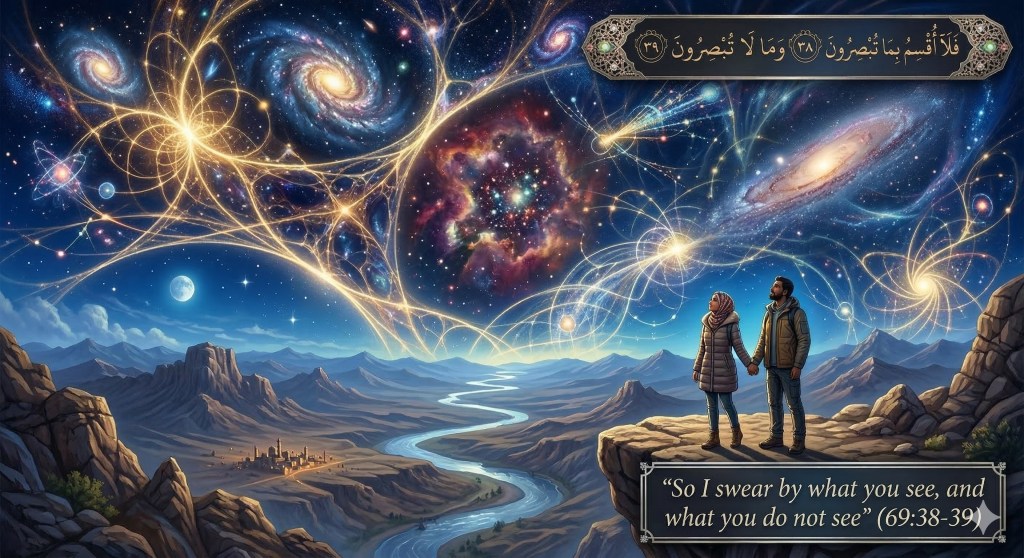
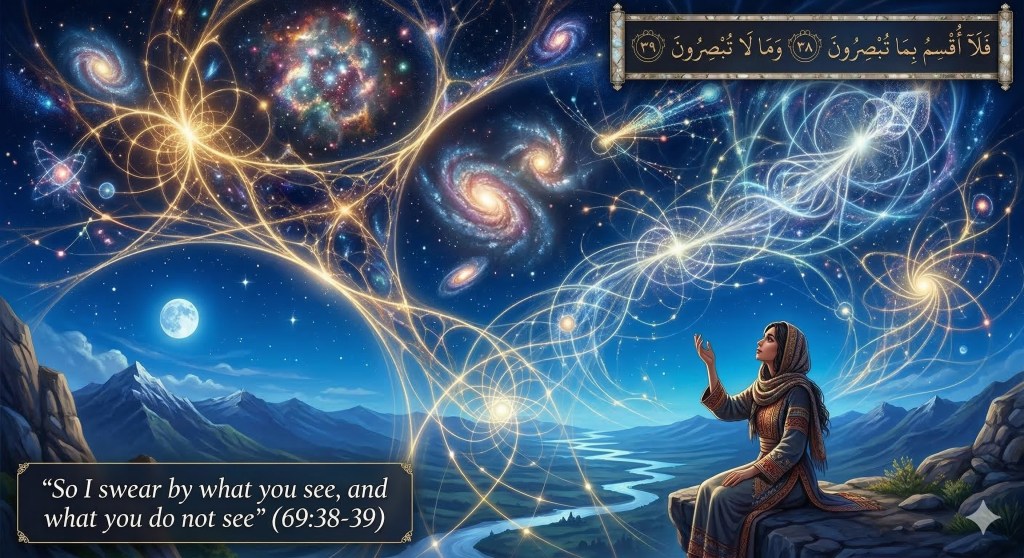
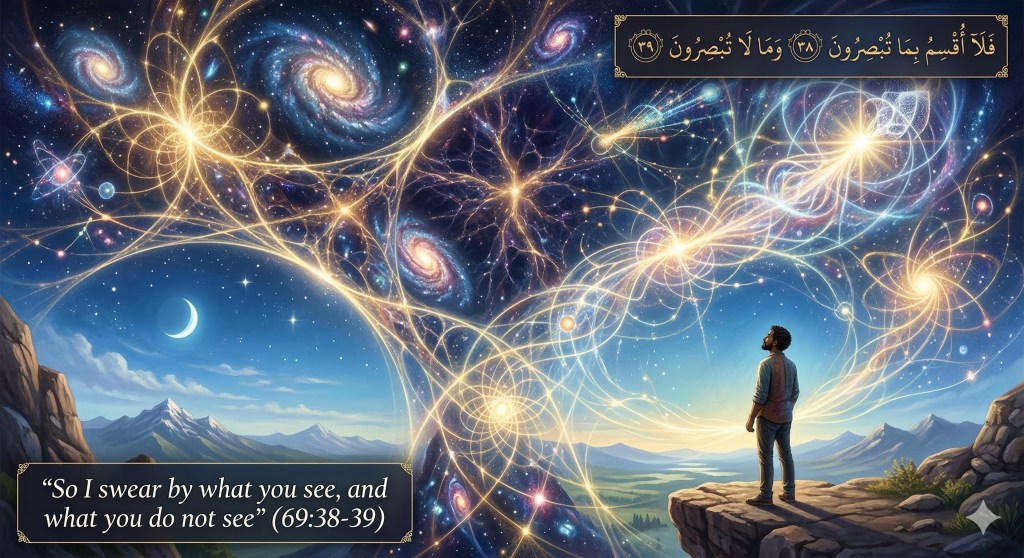
This I find would be an apt description of the Standard Model of particle physics, which does not yet account for the mystery of gravity. The Standard Model then becomes one of the commentaries of the verses under discussion, with still far more yet left in physics and other branches of science to ponder over.
If you still do not share my marvel and awe, may I suggest you try to learn about Nobel Prize of physics in 2022 as the plot keeps thickening.
The Schwinger effect remains a compelling subject in theoretical and experimental physics, illustrating the intricate interplay between quantum mechanics and electromagnetism. As advancements in high-intensity laser technology continue, the prospect of observing this phenomenon becomes increasingly feasible, offering a deeper understanding of the quantum vacuum and the fundamental forces of nature.
When physicists talk about nothing, often it is not nothing as there still are quantum fields, laws of nature and more. The only Being that creates from really material nothing is God Almighty of the Abrahamic faiths:
بَدِيعُ السَّمَاوَاتِ وَالْأَرْضِ ۖ وَإِذَا قَضَىٰ أَمْرًا فَإِنَّمَا يَقُولُ لَهُ كُن فَيَكُونُ
He is the Originator of the heavens and the earth, and when He decrees something, He says only, ‘Be,’ and it is. (Al Quran 2:117)
Have they been created from nothing, or are they their own creators? Have they created the heavens and the earth? In truth they put no faith in anything. (Al Quran 52:35-36)
Therefore, I choose to worship the God of Kaaba in Mecca:


 The Glorious Quran and Science
Leave a comment