
Epigraph:
We will show them Our Signs in the universe and also in their own consciousness, until it becomes manifest to them that the Quran is the truth. (Al Quran 41:53)
Do they not see the birds made to fly through the air in the sky? Nothing holds them up except God. There truly are signs in this for those who believe. (Al Quran 16:79)
[Prophet], do you not see that all those who are in the heavens and earth praise God, as do the birds with wings outstretched? Each knows its [own way] of prayer and glorification: God has full knowledge of what they do. Control of the heavens and earth belongs to God: and to God is the final return. (Al Quran 24:41-42)
The seven heavens and the earth and those that are therein extol His glory; and there is not a thing but glorifies Him with His praise; but you understand not their glorification. Indeed, He is Forbearing, Most Merciful. (Al Quran 17:44)
Written and collected by Zia H Shah MD, Chief Editor of the Muslim Times
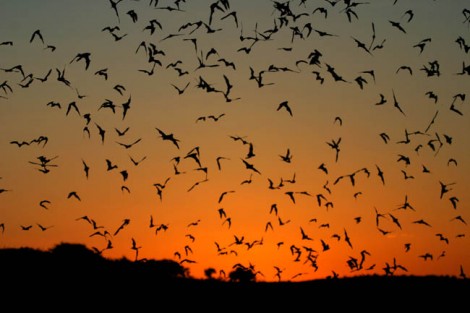
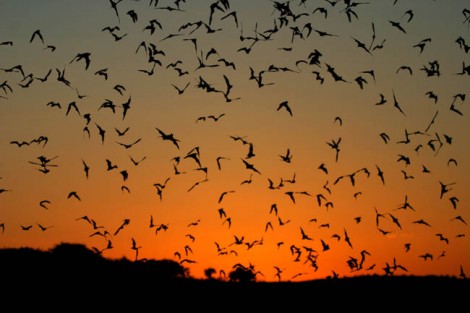
The holy Quran is not a book of biology, rather a book of theology. So, it uses the same word for birds and bats for its first addressees, the seventh century Arabs, to share with humanity the miracles of what Allah has created. The Quran calls them His Signs!
Donald Griffin, who first described echolocation: ultrasound or radar vision in bats, tells what happened when he and his friend Robert Galambos first reported to an astonished conference of zoologists in 1940 their new discovery of echolocation in bats. One distinguished scientist was so angrily incredulous that he seized Galambos by the shoulders and shook him while complaining they could not possibly mean such an outrageous suggestion. Radar and sonar were still highly classified developments in military technology, and the notion that bats might do anything even remotely analogous to the latest triumphs of electronic engineering struck most people as not only implausible but emotionally repugnant.[1]
Worth special mention here is a confession of an atheist; in the words of Professor Richard Dawkins, “Whenever humans have a good idea, zoologists have grown accustomed to finding it anticipated in the animal kingdom. Examples pervade this book; including echo-ranging (bats), electro location (the Duckbill’s Tale), the dam (the Beaver’s Tale), the parabolic reflector (limpets), the infrared heat-seeking sensor (some snakes), the hypodermic syringe (wasps, snakes and scorpions), the harpoon (cnidarians) and jet propulsion (squids).”[2] When humans make these discoveries, Nobel prizes and other high awards are given but how do we honor the nature that presented these technologies before mankind, we label it as chance development or accidents! Likewise, it takes the best human minds to barely fathom the mysteries of Quantum physics. Yet, many among us do not pause to attribute the end result of particle physics, the universe, to a blind accident.
Bats possess a remarkable navigation system known as echolocation, which enables them to “see” their environment using sound. By emitting ultrasonic calls and analyzing the returning echoes, bats can detect obstacles, locate prey, and navigate through complete darkness with exceptional precision.
Echolocation Mechanism
Echolocation involves producing high-frequency sound waves, typically ranging from 14,000 to over 100,000 hertz, beyond the range of human hearing. These sounds are generated in the larynx and emitted through the mouth or nose. When these ultrasonic waves encounter objects, they reflect back as echoes. By assessing the time delay between emission and echo return, as well as the intensity and frequency shifts of the echoes, bats construct a detailed auditory map of their surroundings.
Integration with Vision
Contrary to popular belief, many bats are not blind; they possess functional vision that complements their echolocation abilities. For instance, the northern bat (Eptesicus nilssonii) uses both echolocation and vision to detect prey, especially in complex environments where visual cues can enhance hunting efficiency.
…
Evolutionary Adaptations
The evolution of echolocation in bats has led to trade-offs with other sensory modalities. Research indicates that echolocating bats have experienced a reduction in olfactory receptor genes and certain vision-related genes, suggesting an evolutionary shift favoring auditory over olfactory and visual senses.

Applications in Technology
The sophisticated echolocation system of bats has inspired technological advancements. Researchers have developed systems like “BatVision,” which emulate bat echolocation to interpret 3D spatial layouts using sound. Such bio-inspired technologies hold promise for enhancing machine perception in low-visibility conditions.
Conclusion
Bats’ ultrasonic navigation, or echolocation, exemplifies a highly specialized adaptation that allows these nocturnal creatures to thrive in darkness. The integration of echolocation with other senses, evolutionary modifications, and the inspiration drawn from these mechanisms for human technology underscore the complexity and efficiency of bats’ sensory systems.
When any honest scientist studies nature, he feels, like Albert Einstein, the presence of superior reasoning power, revealed in the incomprehensible universe. However, as the novelty of any new discovery in nature wears off, we begin to take the beauty, complexity, organization and co-ordination that we see every day around us for granted and many among us become vulnerable to think that it may have come into existence purely by chance. However, when we come across the newly discovered organization in nature our prior inferences are challenged. We are flabbergasted and astounded for a brief period of time and truly applause the beauty of the creation of God for a little while, until we are duped by the secular propaganda of neo-Darwinism again and begin to take things for granted. Anesthesia of familiarity takes over!
I resist the temptation and sit back and as I admire the biology, cosmology and human physiology, I not only admire the amazing nature, but also glorify even the more amazing subtle Creator, behind all these realties.
This is what I read in the Quran:
He is Allah, the Creator, the Maker, the Fashioner. His are the most beautiful names. All that is in the heavens and the earth glorifies Him, and He is the Mighty, the Wise. (Al Quran 59:24)
He is the Mighty, the Forgiving; Who created the seven heavens, one above the other. You will not see any flaw in what the Lord of Mercy creates. Look again! Can you see any flaw? Look again! And again! Your sight will turn back to you, weak and defeated. (Al Quran 67:2-4)
This is also what echoes in the best human minds:
Try and penetrate with our limited means the secrets of nature and you will find that, behind all the discernible concatenations, there remains something subtle, intangible and inexplicable. Veneration for this force beyond anything that we can comprehend is my religion. To that extent I am, in point of fact, religious. — Albert Einstein
Two things fill the mind with ever-increasing wonder and awe, the more often and the more intensely the mind of thought is drawn to them: the starry heavens above me and the moral law within me. — Immanuel Kant
References
- Richard Dawkins. The blind watchmaker: why the evidence of evolution reveals a universe. WW Norton and company, 1996. Page 35.
2. Richard Dawkins. The ancestor’s tale. Houghton Mifflin Company 2004. P 545.


 The Glorious Quran and Science
Leave a comment