
Epigraph
The disbelievers say: This Quran is naught but a lie that Muhammad has fabricated, and other people have helped him with it. They have, thereby, perpetrated an injustice and an untruth. They also say: These are fables of the ancients which he has got someone to write down for him and they are recited to him morning and evening. Say to them: The Quran has been revealed by Him Who knows every secret that is in the heavens and the earth. Indeed, He is Most Forgiving, Ever Merciful. (Al Quran 25:5-7)

Written and collected by Zia H Shah MD, Chief Editor of the Muslim Times
Maurice Bucaille (1920–1998) was a French medical doctor and author renowned for his work exploring the relationship between religious scriptures and modern science. His most influential book, The Bible, The Qur’an and Science, published in 1976, examines the compatibility of these texts with contemporary scientific knowledge.
Bucaille’s Contributions
In The Bible, The Qur’an and Science, Bucaille analyzes the scriptures of Judaism, Christianity, and Islam, assessing their alignment with scientific facts. He concludes that the Qur’an contains statements consistent with modern science, suggesting its divine origin. This perspective has inspired a movement known as Bucailleism, which seeks to reconcile Islamic teachings with scientific discoveries.
Arguments in Favor of Bucailleism
- Scientific Accuracy of the Qur’an: Proponents argue that the Qur’an’s descriptions of natural phenomena align with modern scientific understanding, indicating its authenticity and divine source.
- Encouragement of Scientific Inquiry: Bucailleism promotes the idea that Islam encourages the pursuit of knowledge, bridging the gap between faith and reason.
- Interfaith Dialogue: By comparing religious texts, Bucaille’s work fosters discussions among different faith communities, promoting mutual understanding.
Critiques of Bucailleism
- Selective Interpretation: Critics assert that Bucailleism relies on selective readings of scriptures, interpreting ambiguous verses to fit scientific facts, which may lead to confirmation bias.
- Anachronistic Analysis: Some scholars argue that applying modern scientific concepts to ancient texts imposes contemporary understanding onto historical contexts, potentially distorting original meanings.
- Overemphasis on Concordance: Focusing on aligning religious texts with science may overlook the spiritual and moral messages central to these scriptures.
Conclusion
Maurice Bucaille’s work has significantly influenced discussions on the relationship between Islam and science. While Bucailleism has garnered support for highlighting perceived scientific insights in the Qur’an, it also faces criticism for its interpretative methods. The ongoing debate reflects the complex interplay between faith and reason in the modern world.
Additional reading
The Female Bees and the Male Bees, How Did the Quran Know?
Are Female Honey Bees Evidence for Guided Evolution?
Arguing for Extra Dimensions in Physics from God’s Omniscience
Even a Single Profound Dream or Revelation Defeats Physicalism or Atheism
Why is the Quran a Sign or a Miracle, According to Itself?
The Quran and the Breathtaking Universe: Is This God Speaking or Muhammad?
The Miracle of the Quran: It Speaks of Innumerable Stars and Innumerable Earths
The Quran and the Expanding Universe: Is This God Speaking or Muhammad?
The Quran and Creation Ex Nihilo: Is This God Speaking or Muhammad?

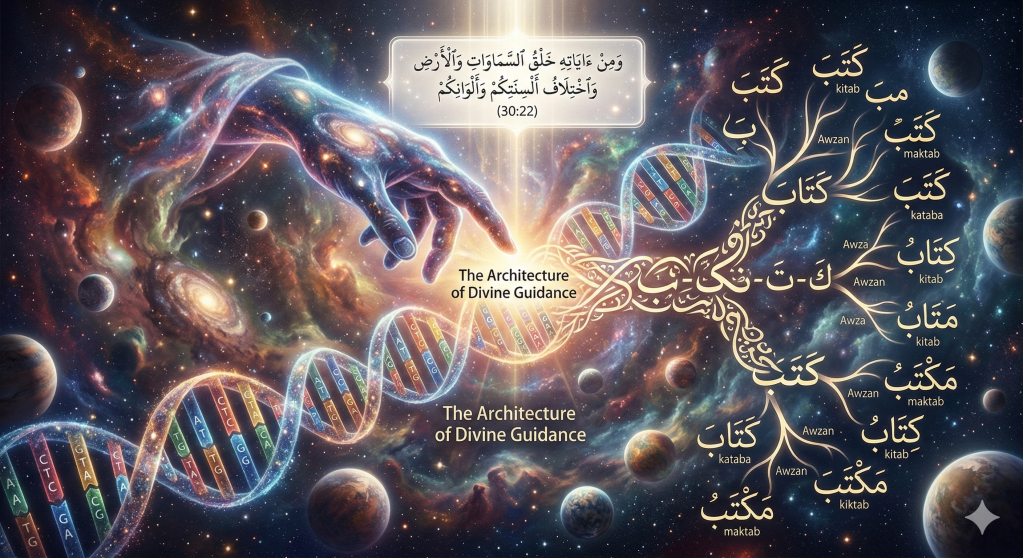

 The Glorious Quran and Science
Leave a comment