
Epigraph:
Allah takes away the souls of human beings at the time of their death; and of those also that are not yet dead, during their sleep. And then He retains those against which He has decreed death, and sends back the others till an appointed term. In that surely are Signs for a people who reflect. (Al Quran 39:42)
Written and collected by Zia H Shah MD, Chief Editor of the Muslim Times
The verse quoted as epigraph mentions sleep as a metaphor for death and Afterlife. This I find as a very concise, yet a precise and profound description of consciousness, soul and Afterlife. To fully appreciate the metaphor, I want to bring in a discussion of hibernation, which is in some sense exactly in between sleep and death.
Hibernation is one of nature’s most fascinating survival strategies, enabling animals to withstand harsh environmental conditions such as extreme cold or food scarcity. While often compared to sleep due to its prolonged state of inactivity, hibernation is a distinct biological process with its own unique characteristics. This article explores hibernation in various species, examining its physiological underpinnings and how it relates to sleep.
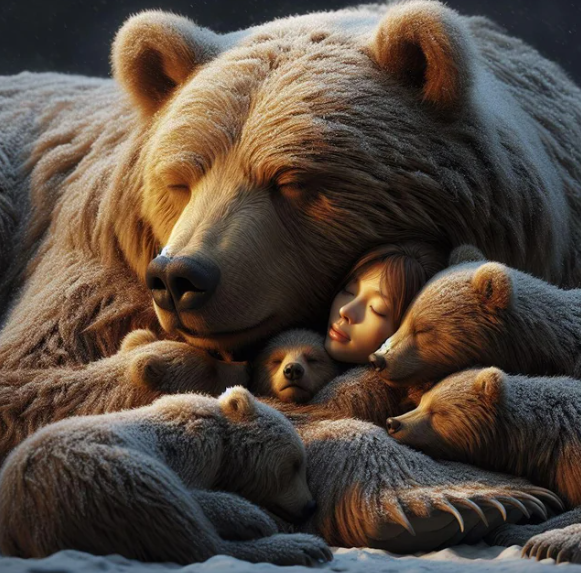
Hibernation is a deep sleep that animals undergo during the winter. During hibernation, animals don’t eat or urinate. Black bears can hibernate for up to seven and a half months and grizzly bears typically hibernate for five to seven months. Edible dormouse can hibernate for more than 11 months in the wild. To prepare for hibernation, they triple their body weight while active. The Romans considered their hibernation-ready bodies a delicacy. In woodchucks heart rate goes from 80 beats per minute when active to 4 or 5 beats per minute when hibernating.
What is Hibernation?
Hibernation is a state of torpor or metabolic depression that some animals enter during unfavorable conditions. It involves a significant drop in body temperature, heart rate, respiratory rate, and metabolic activity. This state allows animals to conserve energy and survive periods when food is scarce or temperatures are too low for normal activity.
Hibernation Across Different Species
Mammals
Hibernation is most commonly associated with mammals, particularly those in cold climates. Classic examples include:
- Bears: Contrary to popular belief, bears do not truly hibernate but enter a state called torpor. During torpor, their body temperature drops slightly, and they rely on stored fat reserves. Unlike true hibernators, bears can wake up relatively quickly if disturbed.
- Ground Squirrels and Chipmunks: True hibernators like ground squirrels experience profound physiological changes, including dramatic reductions in body temperature, sometimes approaching freezing. They periodically awaken to eat and excrete waste.
- Bats: Many bat species hibernate in caves during winter. Their heart rate can drop from hundreds of beats per minute to just a few, conserving energy until insects become available again in spring.
Birds
While hibernation is rare in birds, some species enter torpor, a shorter, less intense form of hibernation. For instance:
- Common Poorwill: This North American bird is one of the few avian species known to hibernate. It reduces its metabolic rate and body temperature during winter months, hiding in crevices or under rocks.
Reptiles and Amphibians
Ectothermic animals, such as reptiles and amphibians, often enter hibernation or brumation (a similar state specific to cold-blooded species). Examples include:
- Snakes: Many snakes hibernate in communal dens during the winter, a process known as brumation. Their metabolism slows dramatically, allowing them to survive on stored energy.
- Frogs: Some frogs, like the wood frog, endure freezing temperatures by producing cryoprotectants like glucose, which prevent ice crystals from damaging their tissues.
Fish
Some fish species, like Antarctic icefish, enter a hibernation-like state during winter, slowing their metabolic processes to survive in oxygen-poor, freezing waters.
Insects
Hibernation in insects is known as diapause. Species like ladybugs, butterflies, and beetles undergo diapause during winter, ceasing development and conserving energy until conditions improve.
Hibernation vs. Sleep
Although hibernation and sleep share similarities, such as reduced physical activity, they are fundamentally different processes.
- Physiological Differences:
- Sleep: A regular, daily state involving cycles of rapid eye movement (REM) and non-REM phases. Sleep is essential for brain restoration and memory consolidation.
- Hibernation: A prolonged state of metabolic depression. Animals in hibernation do not experience REM or non-REM sleep cycles and may not dream.
- Energy Conservation:
- Both sleep and hibernation conserve energy, but hibernation achieves this on a much larger scale by shutting down non-essential bodily functions.
- Brain Activity:
- During sleep, brain activity remains relatively high and organized, reflecting active neural processes. In contrast, brain activity during hibernation is minimal, resembling a state of suspended animation.
Hibernation and Sleep: Interactions
Interestingly, hibernation does not eliminate the need for sleep. Animals periodically arouse from hibernation to engage in brief sleep cycles, particularly REM sleep. This suggests that while hibernation helps conserve energy, sleep is still critical for brain function and physiological maintenance.
For example, hibernating ground squirrels wake every few weeks to engage in REM sleep, which appears necessary for neural health and functionality. This interplay highlights the complementary roles of hibernation and sleep in animal survival.
The Evolutionary Significance of Hibernation
Hibernation is an evolutionary adaptation that allows animals to optimize their survival in environments with seasonal extremes. By dramatically reducing energy expenditure, hibernators endure conditions that would otherwise be fatal. Sleep, on the other hand, serves essential functions for all animals, maintaining brain health and physiological balance. Together, these processes underscore the diverse strategies life has developed to thrive in an ever-changing world.
Conclusion
Hibernation is a remarkable phenomenon that showcases the adaptability of life. While distinct from sleep, it is intricately connected to the overall health and survival of hibernating animals. By understanding the mechanisms behind hibernation and its relationship with sleep, scientists gain insights not only into the resilience of nature but also into potential applications, such as human consciousness and medical advances in human metabolism and long-term space travel.
For a theist both sleep and hibernation are fertile areas to not only understand human consciousness but also human soul.


 The Glorious Quran and Science
Leave a comment