
Epigraph:
وَيَسْأَلُونَكَ عَنِ الرُّوحِ ۖ قُلِ الرُّوحُ مِنْ أَمْرِ رَبِّي وَمَا أُوتِيتُم مِّنَ الْعِلْمِ إِلَّا قَلِيلًا
And they ask you concerning the soul. Say, ‘The soul is by the command of my Lord; and of the knowledge thereof you have been given but a little.’ (Al Quran 17:85)
Written and collected by Zia H Shah MD, Chief Editor of the Muslim Times
Most academic philosophers and leading scientists today, more than three fourth of them, are atheists and also naturalist and materialists. So, when they are studying anything they want to reduce it to material causes and explanations.
This is definitely true for the study of consciousness and is nicely summarized by the first interviewee in the above video, Nicholas Humphrey.
I on the other hand am a devout Muslim. I believe the Quran to be the literal word of God, revealed to the mind of Muhammad, may peace be on him, over a 22-23 year span from 610-632 AD. As I take it as a fundamental reality, what ramifications does it have on our study of human consciousness? As God of Abrahamic faiths is beyond time, space and matter, we cannot study or find Him in the natural world, as a part of our universe. He says in the Quran:
Eyes cannot reach Him but He reaches the eyes. And He is the Incomprehensible, the All-Aware. (Al Quran 6:103)
Allah is the Knower of the unseen; and He reveals not His secrets to anyone, except to him whom He chooses from among His messengers. (Al Quran 72:26-27)
It is not granted to any mortal that God should speak to him except through revelation or from behind a veil, or by sending a messenger to reveal by His command what He will: He is exalted and wise. (Al Quran 42:51)
So, the Muslim ontology in trying to describe all that exists definitely includes that All Knowing God can communicate with the human mind or consciousness. Therefore, at the bare minimum, an interface exists between the supernatural and the natural brain. In other words no study of brain can be complete in a naturalistic or materialistic paradigm.
Now, I will pick the most prominent philosopher in the contemporary discussions of human consciousness, Daniel Dennett. He passed away in April of 2024 at an age of 82.
Dennett, who had been included among the four horsemen of neo-atheism, along with Richard Dawkins, Christopher Hitchens and Sam Harris, was one of the most influential thinkers in the philosophy of mind and consciousness. Known for his sharp analytical approach and a naturalist perspective, Dennett has developed a distinctive view of consciousness that challenges traditional intuitions and redefines how we understand the nature of subjective experience. His work is both provocative and profoundly influential, shaping the debates surrounding consciousness in philosophy, cognitive science, and artificial intelligence.
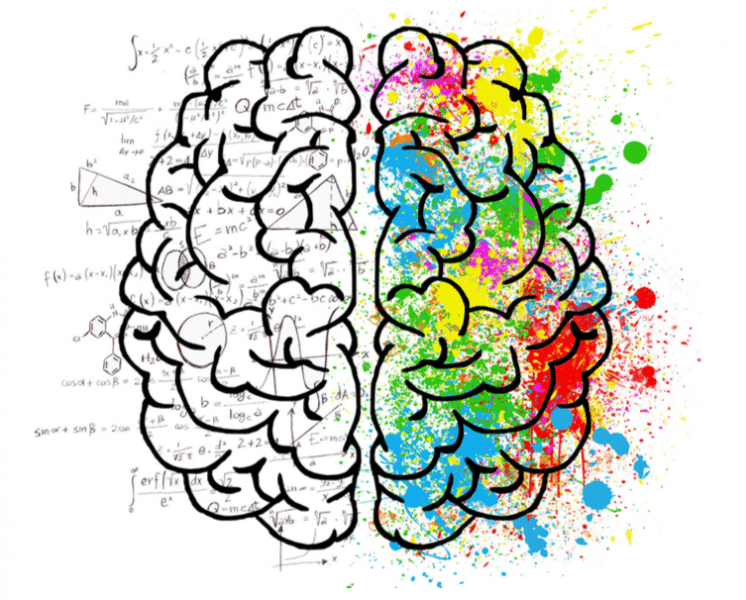
The “Hard Problem” of Consciousness
Before diving into Dennett’s views, it’s essential to understand the broader context of the “hard problem” of consciousness—a term popularized by philosopher David Chalmers. This problem addresses the question of why and how subjective experiences, or “qualia,” arise from physical brain processes. Many philosophers argue that qualia pose a fundamental challenge to materialist and reductionist accounts of the mind.
Dennett, however, takes a contrarian stance. He denies the premise that subjective experiences represent an insurmountable problem. For him, the “hard problem” is a conceptual confusion, a product of misguided intuitions rather than an actual scientific mystery.
Consciousness as an Illusion
Dennett provocatively argues that consciousness, as traditionally conceived, is an illusion. This doesn’t mean he denies the existence of mental phenomena or subjective experiences. Instead, he challenges the notion that consciousness is a unified, mysterious inner realm distinct from physical processes. In his seminal book, Consciousness Explained (1991), Dennett dismantles the idea of the “Cartesian Theater,” a metaphorical space in the brain where all experiences are unified and presented to a central observer.
Instead, Dennett introduces the “Multiple Drafts Model” of consciousness. According to this model, consciousness arises from a distributed, parallel process in the brain, with no central locus or “viewer.” Mental events occur in various streams or “drafts,” and what we perceive as a unified experience is a post-hoc narrative constructed by the brain. In Dennett’s view, consciousness is not a singular entity but a dynamic process shaped by interpretation, memory, and interaction with the environment.
The Role of Evolution
Dennett’s perspective is deeply rooted in evolutionary theory. He sees consciousness as a product of natural selection, evolving to serve specific adaptive functions. For Dennett, phenomena like self-awareness, intentionality, and the ability to reflect on one’s thoughts are evolutionary innovations, not metaphysical puzzles.
Drawing on Darwinian principles, Dennett argues that the brain has developed mechanisms to filter and prioritize information, creating the illusion of a coherent, continuous stream of consciousness. These mechanisms enable humans to navigate complex social and physical environments effectively.
Intentional Stance and Folk Psychology
Dennett also introduces the concept of the “intentional stance,” a framework for understanding behavior by attributing beliefs, desires, and intentions to agents. This stance is not just a tool for interpreting others’ actions but also a crucial aspect of how humans construct their own consciousness. By adopting this perspective, the brain simplifies the overwhelming complexity of internal processes, creating a sense of agency and selfhood.
Dennett acknowledges that folk psychology—the intuitive framework people use to understand mental states—plays a significant role in shaping our perception of consciousness. However, he contends that this framework is limited and often misrepresents the underlying mechanisms of the mind.
Criticism and Controversy
Dennett’s views have sparked significant debate and criticism. Some philosophers argue that his dismissal of qualia ignores the core subjective aspect of consciousness that demands explanation. Critics like David Chalmers suggest that Dennett’s approach, while valuable for understanding the functional and evolutionary aspects of the mind, fails to address the intrinsic, first-person nature of experience.
Others find Dennett’s reductionist stance too extreme, accusing him of “explaining away” rather than explaining consciousness. Despite these critiques, Dennett’s work remains a cornerstone in the philosophy of mind, challenging researchers to think critically about their assumptions.
Conclusion
Daniel Dennett’s understanding of consciousness reshapes traditional debates by emphasizing naturalistic, empirical explanations over metaphysical speculation. His innovative models, such as the Multiple Drafts framework and the intentional stance, offer powerful tools for exploring the mind’s complexities.
I today make a tall claim based on my understanding of the Quran and its history that study of human consciousness will never be complete in naturalistic paradigm, for it has no access to the interface with the Divine. My claim is falsifiable and therefore is not merely a hyperbole or tautology. It will be falsified if humans have such complete understanding of human consciousness that they can recreate it or upload it into other media. Additionally, it will be falsified if humans are able to give consciousness to artificial intelligence (AI) of a kind and degree that is similar to what humanity has.
My agnostic or atheist critics will be quick to jump that I am proposing a God-of-the-Gaps. Not so fast! I am claiming this gap will never genuinely be filled in decades or centuries to come and human consciousness and our relationship with the Divine will forever remain a fool-proof argument for our Divine Creator, Who created us in His image.
QED!




 The Glorious Quran and Science
Leave a comment